

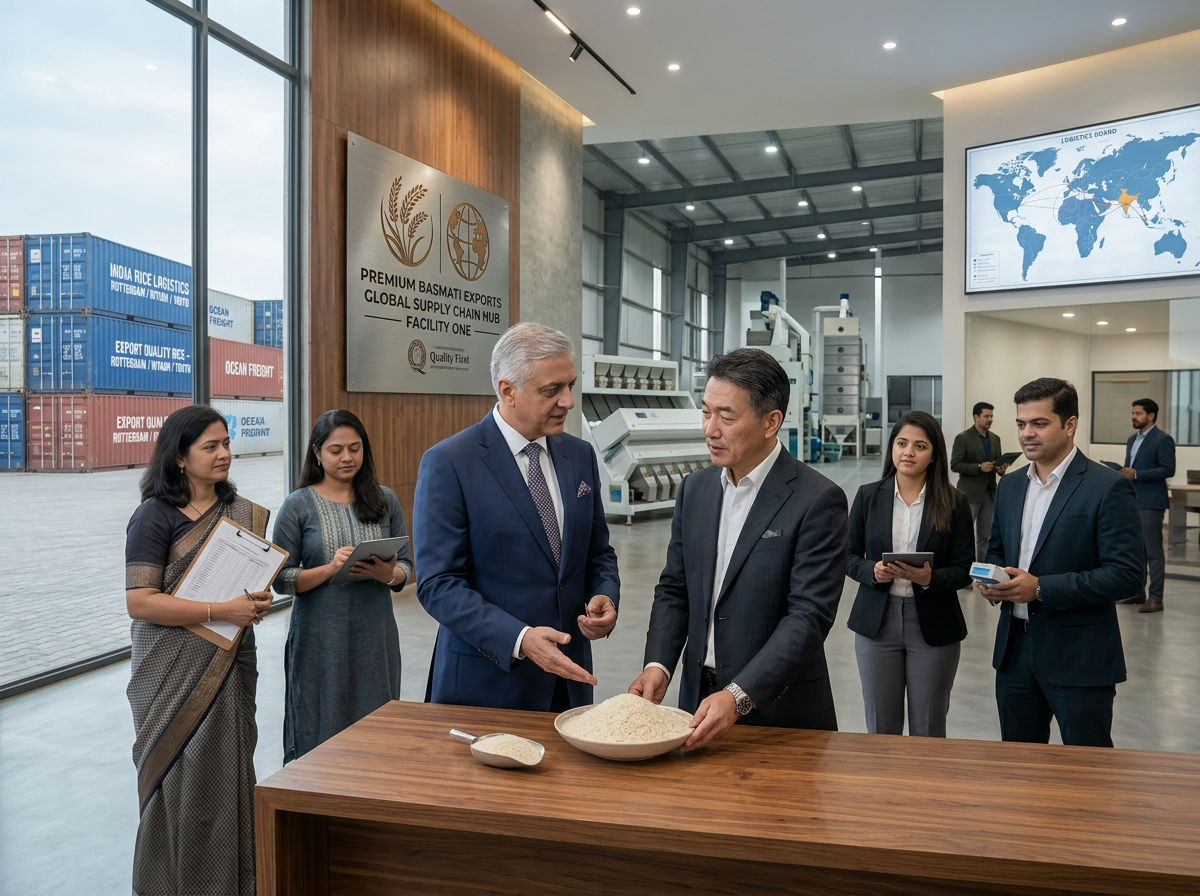
For international buyers, rice sourcing is not simply about finding the lowest price. Long-term success depends on supply reliability, quality consistency, logistics efficiency, and supplier transparency. This is why importers across the Middle East, Africa, Europe, North America, and Asia continue to strengthen partnerships with Indian rice exporters.
Why International Buyers Choose Indian Rice Exporters for Long-Term Supply
In today's competitive global food market, securing a reliable and consistent rice supply is a critical priority for importers, wholesalers, distributors, retailers, and food processing companies. As one of the world's largest rice-producing and exporting countries, India has established itself as a trusted sourcing destination for buyers seeking long-term supply partnerships.
From superior production capacity and diverse rice varieties to competitive pricing and strong export infrastructure, Indian rice exporters continue to meet the evolving demands of international markets. This article explores the key reasons why global buyers prefer Indian rice exporters for long-term supply agreements.
1. Consistent Large-Scale Production Capacity
One of the primary reasons international buyers choose Indian rice exporters is India's massive rice production capability. The country produces millions of metric tons of rice annually, ensuring sufficient availability for both domestic consumption and international exports.
This large production base enables exporters to fulfill high-volume orders consistently throughout the year, making India a dependable sourcing partner for long-term contracts.
- Stable year-round supply availability
- Capacity to handle bulk export requirements
- Reduced risk of supply shortages
- Reliable fulfillment of recurring orders
2. Wide Variety of Rice Options
Indian exporters offer one of the most diverse rice portfolios in the global market. Buyers can source multiple rice varieties from a single supplier, simplifying procurement and supply chain management.
Popular export categories include:
- Basmati Rice
- 1121 Basmati Rice
- Pusa Basmati Rice
- Traditional Basmati Rice
- Non-Basmati Rice
- Sona Masoori Rice
- IR 64 Rice
- PR 11 Rice
- Parboiled Rice
- Broken Rice
This product diversity allows international buyers to serve multiple customer segments while maintaining a streamlined supplier network.
3. Competitive Pricing Advantage
Price competitiveness remains a significant factor in global sourcing decisions. Indian rice exporters benefit from extensive agricultural resources, efficient production systems, and established export networks, allowing them to offer attractive pricing without compromising quality.
Long-term buyers often benefit from:
- Competitive FOB and CIF pricing
- Volume-based pricing benefits
- Stable procurement costs
- Improved profit margins
This cost advantage helps importers remain competitive in their local markets while ensuring sustainable business growth.
4. Strong Quality Control Standards
Modern Indian rice exporters have invested heavily in advanced processing facilities, grading systems, sorting technology, and quality assurance procedures. These investments help maintain consistent product quality across shipments.
Key quality parameters include:
- Purity levels
- Grain length consistency
- Moisture control
- Minimal broken percentage
- Proper packaging standards
Reliable quality consistency is essential for buyers who require predictable product performance throughout long-term supply agreements.
5. Established Export Infrastructure
India possesses a well-developed export ecosystem supported by modern ports, logistics providers, warehousing facilities, container availability, and international shipping connections.
This infrastructure enables exporters to:
- Handle large export volumes efficiently
- Ensure timely shipment schedules
- Reduce logistics disruptions
- Support global distribution requirements
Efficient logistics contribute significantly to maintaining long-term supply reliability for overseas buyers.
6. Experience in International Trade
Many Indian rice exporters have decades of experience serving customers across Asia, Africa, Europe, the Middle East, North America, and other global regions.
This international trade expertise helps exporters understand:
- Country-specific import requirements
- Documentation procedures
- Quality certifications
- Packaging regulations
- Shipping and customs processes
Experienced exporters simplify procurement processes and minimize operational challenges for international buyers.
7. Flexible Packaging and Private Label Solutions
Global buyers often require customized packaging to meet retail, wholesale, or food service market demands. Indian exporters offer flexible packaging options designed to support various distribution channels.
Common packaging solutions include:
- 1 kg retail packs
- 5 kg consumer packs
- 10 kg bags
- 25 kg bags
- 50 kg bulk bags
- Private label packaging
This flexibility enables buyers to build their own brands while sourcing directly from reliable Indian suppliers.
8. Long-Term Business Relationship Focus
Successful Indian rice exporters understand that international trade is built on trust, consistency, and mutual growth. Rather than focusing solely on individual transactions, many exporters prioritize long-term partnerships.
Key benefits of long-term collaboration include:
- Priority production scheduling
- Supply continuity
- Stable commercial terms
- Improved communication
- Strategic business support
These advantages help buyers secure dependable supply chains and strengthen market competitiveness.
9. Compliance with International Standards
Leading Indian rice exporters maintain compliance with internationally recognized quality and food safety standards. This commitment helps buyers satisfy regulatory requirements in their target markets.
Common certifications may include:
- ISO Certification
- HACCP Compliance
- FSSAI Registration
- APEDA Registration
- Food Safety Management Certifications
Compliance with recognized standards enhances buyer confidence and facilitates smoother import procedures.
10. Growing Global Reputation for Reliability
Over the years, India has strengthened its position as a leading global rice supplier. International buyers increasingly recognize Indian exporters for their ability to deliver quality products, competitive pricing, consistent supply, and professional export services.
As global food demand continues to rise, Indian rice exporters remain well-positioned to support long-term sourcing strategies for importers worldwide.
Conclusion
Choosing the right rice supplier is essential for maintaining a resilient and profitable supply chain. International buyers continue to choose Indian rice exporters because of their large-scale production capabilities, diverse product offerings, competitive pricing, reliable quality standards, strong export infrastructure, and commitment to long-term partnerships.
For businesses seeking stable and dependable rice sourcing solutions, partnering with an experienced Indian rice exporter can provide the consistency, flexibility, and reliability necessary for sustainable long-term growth in international markets.