

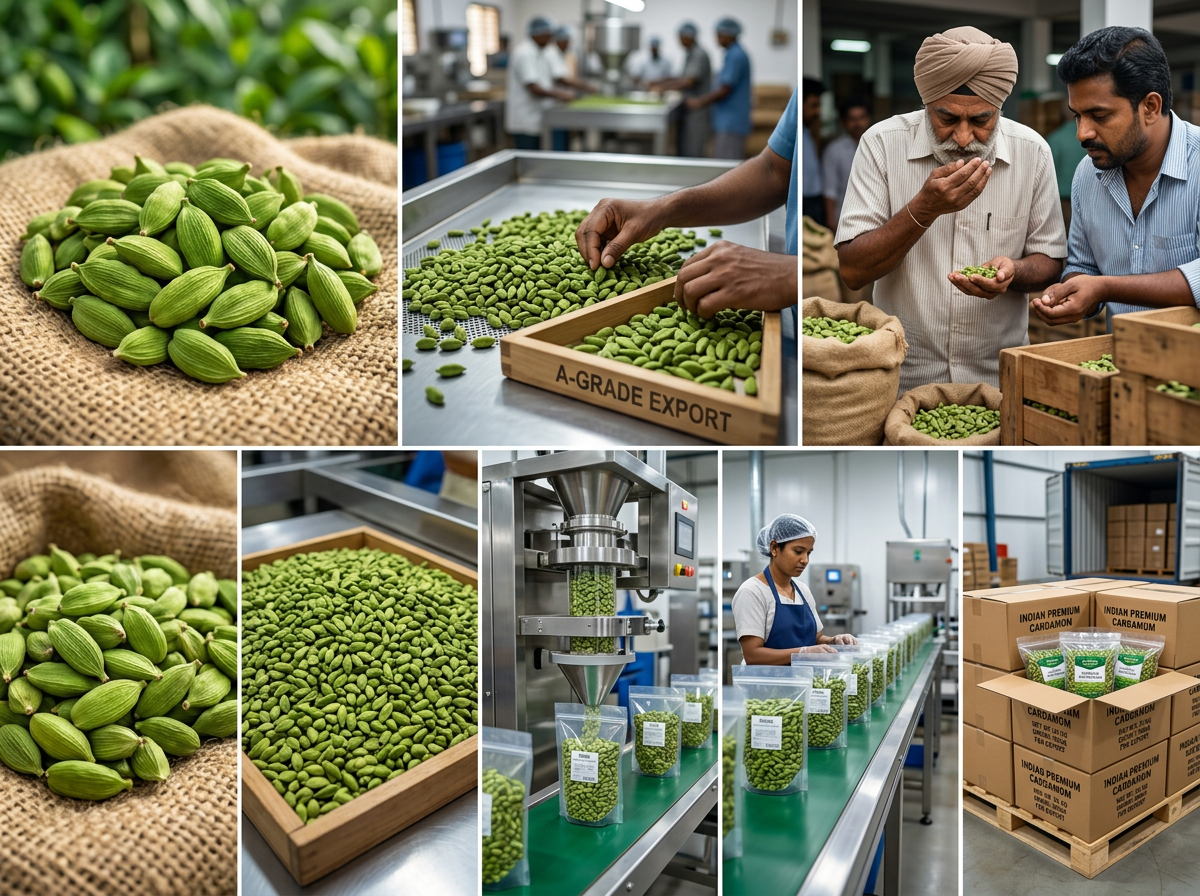
Indian cardamom is highly valued worldwide for its aroma, flavor, and quality. Learn how importers can identify premium grades and source cardamom directly from reliable Indian suppliers.
How to Source Premium Cardamom from India: A Complete Buyer's Guide
Known as the "Queen of Spices," cardamom is one of the world's most valuable and sought-after spices. Its unique aroma, rich flavor profile, and wide range of culinary, pharmaceutical, and food processing applications have created strong global demand across the Middle East, Europe, North America, and Asia.
India has long been recognized as one of the leading producers of premium-quality cardamom. International buyers seeking consistent quality, reliable supply, and competitive sourcing opportunities often turn to Indian exporters for their cardamom requirements.
However, sourcing premium cardamom successfully requires a clear understanding of quality grades, supplier selection, export standards, and market dynamics. This guide explains everything importers need to know when sourcing premium cardamom from India.
Why Indian Cardamom Is Preferred Worldwide
Indian cardamom is globally renowned for its strong aroma, vibrant green color, high oil content, and superior flavor characteristics. These qualities make it highly desirable for food manufacturers, spice distributors, wholesalers, retailers, and hospitality businesses.
Key advantages of Indian cardamom include:
- Exceptional aroma and taste
- High essential oil content
- Strong market reputation
- Consistent export quality standards
- Wide availability of premium grades
- Established export infrastructure
Indian exporters supply cardamom to numerous international markets where quality and consistency are critical purchasing factors.
Major Cardamom Producing Regions in India
Cardamom cultivation is concentrated primarily in the southern regions of India, where favorable climate conditions support high-quality production.
The leading cardamom-producing states include:
- Kerala
- Karnataka
- Tamil Nadu
The Western Ghats region is particularly well known for producing premium green cardamom with excellent aroma, color, and size characteristics.
These growing regions benefit from:
- High rainfall
- Rich soil conditions
- Moderate temperatures
- Ideal elevation levels
The combination of these factors contributes significantly to the superior quality associated with Indian cardamom.
Understanding Cardamom Grades
One of the most important aspects of sourcing cardamom is understanding the grading system. Cardamom is typically graded based on size, color, density, appearance, and overall quality.
Bold Green Cardamom
This is considered one of the highest-quality categories available in the export market.
Characteristics include:
- Large pod size
- Bright green color
- Strong aroma
- Premium appearance
- Higher market value
Medium Grade Cardamom
Medium grades offer a balance between quality and affordability.
- Moderate pod size
- Good color retention
- Suitable for retail packaging
- Popular among distributors
Commercial Grade Cardamom
Commercial grades are commonly used in food processing and industrial applications.
- Smaller pod size
- Variable color characteristics
- Cost-effective sourcing option
- Suitable for grinding and extraction
Buyers should always request detailed grading specifications before placing orders.
Quality Parameters Buyers Should Evaluate
Premium cardamom sourcing requires careful quality assessment. Experienced importers typically evaluate several critical parameters before finalizing purchases.
Color
Bright green pods generally command higher prices due to their premium appearance and market preference.
Size
Larger pods are often associated with higher quality grades and stronger market demand.
Aroma
Fresh cardamom should exhibit a strong, distinctive fragrance that indicates high volatile oil content.
Moisture Content
Proper moisture levels are essential for maintaining product quality during storage and transportation.
Foreign Matter
Premium export-grade cardamom should have minimal impurities, dust, stems, and foreign materials.
Oil Content
Higher oil content often indicates superior flavor and overall product quality.
Quality verification is essential for ensuring consistency across shipments.
How to Verify Cardamom Suppliers in India
Selecting the right supplier is one of the most important decisions in the sourcing process. International buyers should conduct thorough supplier verification before entering into long-term agreements.
Key verification steps include:
- Review company registration documents
- Verify export experience
- Assess processing capabilities
- Review quality control systems
- Check export certifications
- Request customer references
- Evaluate packaging facilities
- Review shipment history
Working with verified suppliers significantly reduces procurement risks and improves supply reliability.
Importance of Sample Evaluation
Before placing bulk orders, buyers should always request representative samples.
Sample evaluations allow importers to assess:
- Pod size consistency
- Color quality
- Aroma strength
- Cleanliness
- Packaging quality
- Product freshness
Laboratory testing may also be appropriate for buyers with specific quality or compliance requirements.
Packaging Options for Export
Proper packaging helps preserve cardamom quality during international transportation and storage.
Common export packaging options include:
- 5 kg bags
- 10 kg bags
- 25 kg bags
- 50 kg bulk packaging
- Vacuum-sealed packaging
- Private label retail packaging
Packaging specifications should align with buyer requirements and destination market regulations.
Export Documentation Required
International shipments of cardamom typically require several export documents.
Common documentation includes:
- Commercial Invoice
- Packing List
- Certificate of Origin
- Bill of Lading
- Phytosanitary Certificate
- Insurance Documents
- Quality Certificates
Accurate documentation helps ensure smooth customs clearance and regulatory compliance.
Common Mistakes Buyers Should Avoid
Many importers encounter challenges due to avoidable sourcing mistakes.
Common errors include:
- Choosing suppliers based solely on price
- Skipping supplier verification
- Ignoring quality testing
- Failing to evaluate samples
- Not reviewing export certifications
- Overlooking packaging requirements
- Depending on a single supplier source
Proper due diligence helps buyers avoid costly procurement problems and supply disruptions.
Building Long-Term Supply Relationships
Successful cardamom sourcing often depends on developing strong supplier partnerships rather than focusing solely on individual transactions.
Long-term relationships can provide:
- Consistent product quality
- Priority allocation during peak demand periods
- Stable pricing arrangements
- Improved communication
- Reliable shipment scheduling
- Better supply chain visibility
Strategic partnerships help both buyers and suppliers achieve sustainable growth.
Future Outlook for Indian Cardamom Exports
Global demand for premium spices continues to grow as consumers seek authentic flavors, natural ingredients, and high-quality food products. Cardamom remains a highly valued ingredient across multiple industries, including food processing, beverages, bakery products, confectionery, and traditional medicine.
With its strong production capabilities, established export network, and reputation for premium quality, India is expected to remain a key supplier of cardamom to international markets in the years ahead.
Conclusion
Sourcing premium cardamom from India offers international buyers access to some of the world's finest spice products. However, successful procurement requires careful supplier evaluation, quality assessment, sample verification, and supply chain planning.
By understanding cardamom grades, evaluating quality parameters, verifying suppliers, and establishing long-term sourcing relationships, importers can secure reliable access to premium Indian cardamom while minimizing procurement risks.
For businesses seeking consistent quality and dependable supply, partnering with experienced Indian cardamom exporters can provide a significant competitive advantage in today's growing global spice market.