

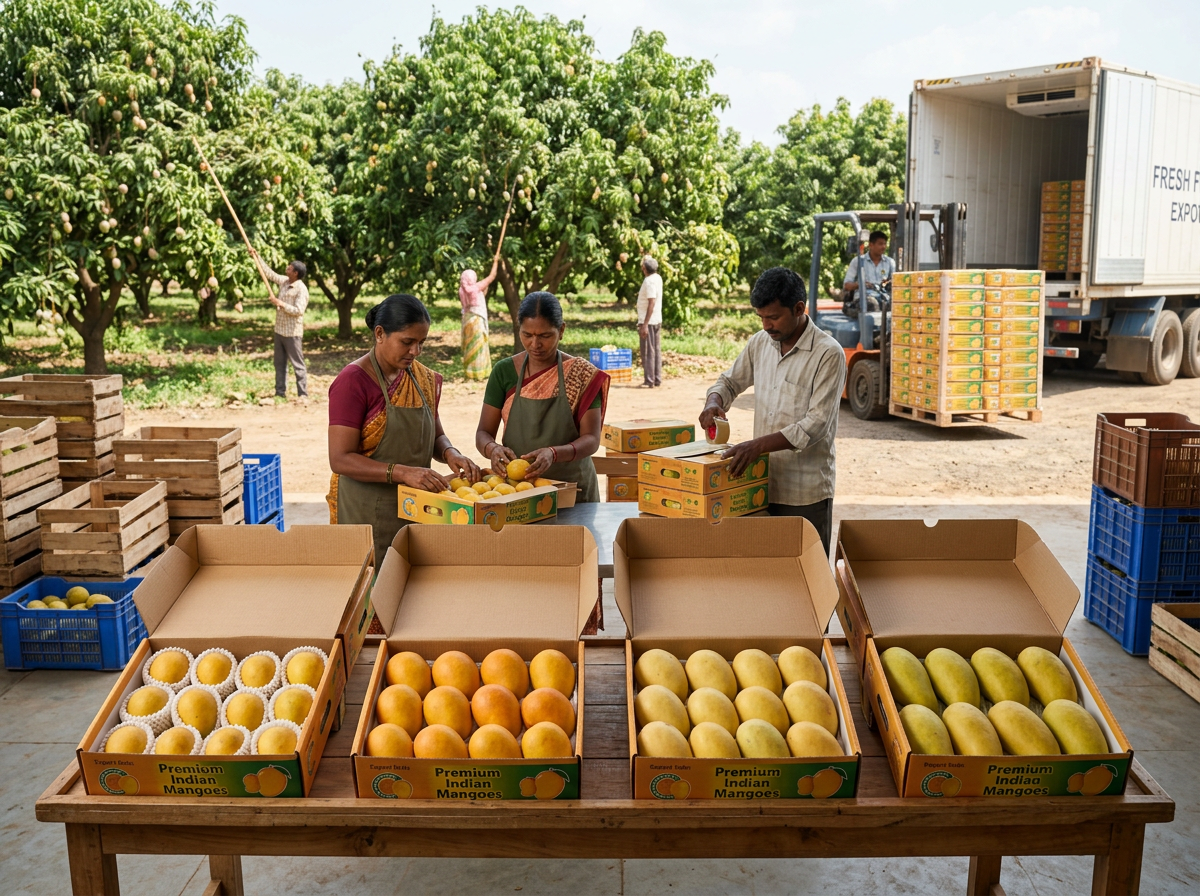
India is the world's largest mango producer and home to some of the most sought-after mango varieties. Learn how importers can source premium fresh mangoes from India for international markets.
Fresh Mangoes Export from India: Complete Guide for International Buyers
Known as the "King of Fruits," mangoes are among India's most celebrated agricultural products. As the world's largest producer of mangoes, India cultivates hundreds of varieties and exports premium-quality fresh mangoes to markets across the Middle East, Europe, North America, Asia, and other regions.
The global demand for fresh Indian mangoes continues to grow due to their exceptional taste, aroma, texture, and variety. For importers, distributors, wholesalers, supermarkets, and food service businesses, India offers a reliable source of premium mangoes during the harvesting season.
This guide explores India's fresh mango export industry, popular export varieties, quality standards, export requirements, and sourcing considerations for international buyers.
Why Import Fresh Mangoes from India?
India accounts for a significant share of global mango production and is home to some of the world's most sought-after mango varieties. The country's favorable climate, diverse growing regions, and centuries of cultivation expertise contribute to the superior quality of Indian mangoes.
Key advantages include:
- Wide variety of premium mangoes
- Exceptional flavor and aroma profiles
- Strong export infrastructure
- Competitive pricing
- Growing international market acceptance
- Reliable seasonal availability
Indian mango exporters supply fresh fruit to importers seeking premium-quality products that appeal to consumers worldwide.
Major Mango Growing Regions in India
Mango cultivation takes place across several Indian states, each known for producing distinct varieties.
Major mango-producing regions include:
- Maharashtra
- Gujarat
- Uttar Pradesh
- Andhra Pradesh
- Telangana
- Karnataka
- Tamil Nadu
- Bihar
- West Bengal
These regions contribute to India's diverse mango portfolio and export capabilities.
Most Popular Indian Mango Varieties for Export
1. Alphonso Mango
Often regarded as the finest mango variety in the world, Alphonso mangoes are prized for their rich sweetness, creamy texture, and distinctive aroma.
Key characteristics:
- Golden-yellow color
- Smooth, non-fibrous pulp
- High sweetness levels
- Premium market positioning
Alphonso mangoes are particularly popular in the UAE, United Kingdom, Canada, and European markets.
2. Kesar Mango
Known for its bright saffron-colored pulp and unique flavor, Kesar mangoes are widely exported and highly valued by consumers.
Advantages include:
- Excellent sweetness
- Attractive color
- Strong aroma
- Good shelf life
Kesar mangoes are especially popular in Middle Eastern markets.
3. Banganapalli Mango
Banganapalli mangoes are recognized for their large size, smooth skin, and sweet flavor profile.
Key features:
- Large fruit size
- Low fiber content
- Long shelf life
- High export demand
4. Dasheri Mango
Dasheri mangoes are known for their aromatic flavor and juicy texture, making them a preferred choice among mango enthusiasts.
- Sweet taste
- Distinct aroma
- Medium-sized fruit
- Popular among retail consumers
5. Other Exported Varieties
Additional export varieties include:
- Totapuri Mango
- Langra Mango
- Himsagar Mango
- Mallika Mango
- Chausa Mango
- Neelam Mango
Each variety serves different market preferences and seasonal demand patterns.
Export Quality Standards for Fresh Mangoes
International buyers expect consistent quality and compliance with destination-country regulations. Export-quality mangoes must meet specific standards before shipment.
Key quality parameters include:
- Uniform fruit size
- Proper maturity levels
- Attractive external appearance
- Freedom from pests and diseases
- Minimal physical damage
- Appropriate sugar content
Exporters typically conduct grading and sorting procedures to ensure compliance with buyer specifications.
Packaging Requirements for Export
Proper packaging plays a critical role in protecting fresh mangoes during transportation and preserving product quality.
Common packaging options include:
- Corrugated export cartons
- Ventilated fruit boxes
- Protective fruit trays
- Customized retail packaging
- Private-label packaging solutions
Packaging must be designed to minimize bruising and support proper air circulation throughout transit.
Cold Chain and Logistics Management
Fresh mango exports require efficient cold chain management to maintain freshness and reduce post-harvest losses.
Critical factors include:
- Pre-cooling procedures
- Temperature-controlled storage
- Refrigerated transportation
- Efficient cargo handling
- Timely shipment scheduling
Proper logistics management helps ensure mangoes arrive in optimal condition.
Export Documentation for Fresh Mango Shipments
International mango exports require accurate documentation to facilitate customs clearance and regulatory compliance.
Typical export documents include:
- Commercial Invoice
- Packing List
- Bill of Lading or Airway Bill
- Certificate of Origin
- Phytosanitary Certificate
- Insurance Documents
- Import Permits (where applicable)
Buyers should confirm destination-country requirements before shipment.
Major Import Markets for Indian Mangoes
Indian mango exporters serve a wide range of international markets.
Key importing regions include:
- United Arab Emirates
- Saudi Arabia
- Qatar
- Kuwait
- Oman
- United Kingdom
- Canada
- United States
- Singapore
- Malaysia
Demand for premium Indian mango varieties continues to increase across both retail and wholesale channels.
How to Select a Reliable Mango Exporter
Choosing the right export partner is essential for maintaining product quality and supply consistency.
Importers should evaluate suppliers based on:
- Export experience
- Product quality standards
- Harvesting and grading processes
- Cold chain capabilities
- Documentation expertise
- Packaging quality
- Delivery reliability
- Customer references
Supplier verification and quality inspections can significantly reduce sourcing risks.
Challenges in Fresh Mango Imports
Like all fresh produce, mango exports involve certain challenges that buyers should consider.
- Seasonal availability
- Shelf-life limitations
- Temperature sensitivity
- Import regulations
- Phytosanitary requirements
- Logistics disruptions
Effective planning and collaboration with experienced exporters can help overcome these challenges.
Future Outlook for Indian Mango Exports
Global demand for fresh fruits continues to grow as consumers increasingly seek premium, natural, and healthy food products. Indian mangoes are well-positioned to benefit from this trend due to their exceptional quality and strong international reputation.
Advancements in post-harvest technology, cold chain infrastructure, and export logistics are expected to further strengthen India's position in the global mango market.
Conclusion
India remains one of the world's most important sources of premium fresh mangoes, offering international buyers access to a diverse range of high-quality varieties. From Alphonso and Kesar to Banganapalli and Dasheri, Indian mangoes continue to attract strong demand across global markets.
For importers seeking reliable suppliers, consistent quality, and competitive sourcing opportunities, partnering with experienced Indian mango exporters can provide significant long-term advantages. With proper supplier verification, quality management, and logistics planning, fresh mango imports from India can become a valuable addition to any fruit distribution business.