

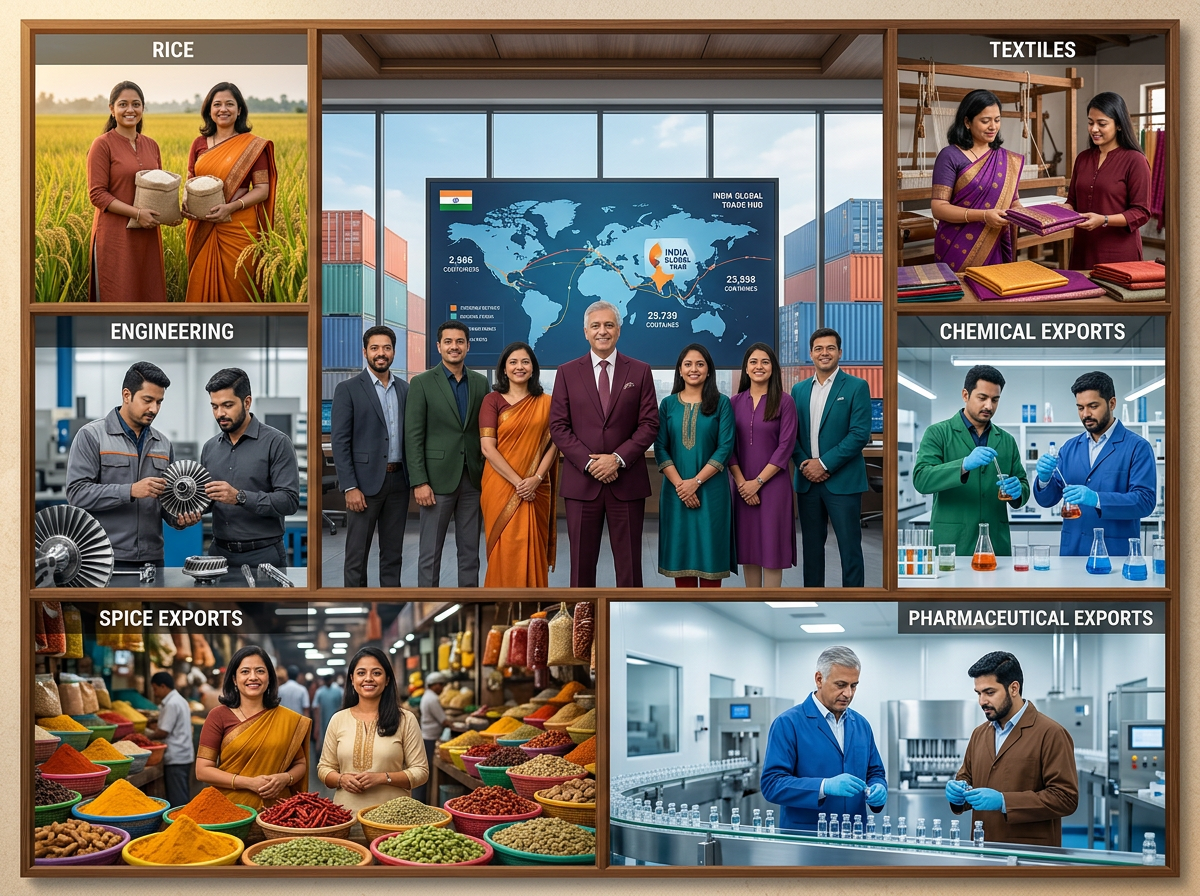
India continues to strengthen its position as a global manufacturing and export hub. Explore the top product categories attracting international buyers in 2026.
Top Products Exported from India in 2026: High-Demand Sourcing Opportunities for Global Buyers
India continues to strengthen its position as one of the world's leading export and manufacturing hubs. With a diverse industrial base, abundant raw materials, competitive production costs, and a rapidly expanding export ecosystem, the country has become a preferred sourcing destination for importers, wholesalers, distributors, retailers, and manufacturers worldwide.
As global supply chains continue to diversify, international buyers are increasingly looking to India for reliable sourcing solutions across multiple industries. From agricultural products and textiles to engineering goods and pharmaceuticals, Indian exporters are serving customers in more than 200 countries and territories.
This guide explores the top products exported from India in 2026 and highlights why global buyers continue to choose Indian suppliers for long-term sourcing partnerships.
India's Growing Role in Global Trade
India's export sector has experienced significant growth over the past decade, driven by government initiatives, manufacturing expansion, infrastructure improvements, and increased global demand for Indian products.
Key advantages that attract international buyers include:
- Competitive manufacturing costs
- Large-scale production capabilities
- Skilled workforce
- Diverse product offerings
- Strong export infrastructure
- Growing compliance with international standards
These strengths position India as a strategic sourcing destination for businesses seeking reliable suppliers and diversified supply chains.
1. Rice and Agricultural Products
India remains one of the world's largest exporters of rice and agricultural commodities. The country's favorable climate, extensive agricultural land, and advanced farming practices support large-scale production and export operations.
Popular agricultural exports include:
- Basmati Rice
- 1121 Basmati Rice
- Non-Basmati Rice
- Parboiled Rice
- Broken Rice
- Wheat
- Maize
- Millets
- Pulses
Rice exports continue to generate strong demand from buyers across the Middle East, Africa, Europe, North America, and Southeast Asia.
2. Spices and Food Ingredients
India is widely recognized as the "Spice Capital of the World" and remains a major supplier of spices, seasonings, and food ingredients to global food manufacturers and distributors.
Leading spice exports include:
- Turmeric
- Cumin Seeds
- Coriander Seeds
- Black Pepper
- Cardamom
- Red Chili
- Fenugreek Seeds
- Ginger
- Mustard Seeds
Growing demand for ethnic cuisines, natural ingredients, and food processing products continues to drive export growth in this sector.
3. Textiles and Garments
India's textile industry remains one of the largest contributors to the country's export economy. International buyers source a wide range of textile products due to India's strong manufacturing capabilities and competitive pricing.
Major textile exports include:
- Cotton Fabrics
- Home Textiles
- Bed Linen
- Towels
- Apparel and Clothing
- Yarn Products
- Industrial Textiles
- Fashion Accessories
Indian textile manufacturers serve major retail brands, wholesalers, and private-label businesses worldwide.
4. Engineering Goods
Engineering goods represent one of India's fastest-growing export categories. The sector benefits from advanced manufacturing capabilities, skilled technical expertise, and increasing global demand.
Popular engineering exports include:
- Industrial Machinery
- Pumps and Valves
- Fasteners
- Casting Components
- Forged Products
- Industrial Equipment
- Electrical Components
- Precision Engineering Parts
International buyers increasingly source engineering products from India as part of their supply chain diversification strategies.
5. Pharmaceuticals and Healthcare Products
India is one of the world's leading pharmaceutical manufacturing centers and plays a vital role in supplying affordable medicines to global markets.
Major pharmaceutical exports include:
- Generic Medicines
- Active Pharmaceutical Ingredients (APIs)
- Vaccines
- Medical Consumables
- Healthcare Products
- Nutraceutical Ingredients
Indian pharmaceutical companies maintain strong regulatory compliance standards and export to numerous international markets.
6. Chemicals and Specialty Chemicals
The chemical sector has emerged as a major export contributor due to increasing demand from manufacturing, agriculture, automotive, and industrial sectors.
Key exports include:
- Industrial Chemicals
- Specialty Chemicals
- Dyes and Pigments
- Agrochemicals
- Organic Chemicals
- Chemical Intermediates
Global buyers appreciate India's growing expertise in specialty chemical manufacturing and large-scale production capabilities.
7. Automotive Components
India has become an important supplier of automotive parts and components for vehicle manufacturers and aftermarket distributors around the world.
Popular exports include:
- Engine Components
- Brake Systems
- Suspension Parts
- Fasteners
- Rubber Components
- Electrical Automotive Parts
- Precision Machined Components
Indian automotive suppliers are increasingly integrated into global automotive supply chains.
8. Home Decor and Handicrafts
India's rich craftsmanship and manufacturing heritage make it a leading exporter of home decor products and handicrafts.
Top exports include:
- Wooden Handicrafts
- Metal Decor Items
- Furniture
- Decorative Lighting
- Handmade Products
- Gift Items
- Artisan Products
Demand remains strong among retailers, importers, and e-commerce sellers seeking unique and handcrafted products.
9. Leather Products
India continues to be a major exporter of high-quality leather products, supported by a well-established manufacturing ecosystem.
Popular exports include:
- Leather Footwear
- Leather Bags
- Wallets
- Belts
- Fashion Accessories
- Industrial Leather Products
Buyers value Indian leather products for their craftsmanship, customization options, and competitive pricing.
10. Consumer Goods and Private Label Products
Increasing numbers of international buyers are partnering with Indian manufacturers for private-label and OEM production.
High-demand product categories include:
- Household Products
- Kitchenware
- Personal Care Products
- Cleaning Products
- Packaging Materials
- Consumer Accessories
Private-label manufacturing opportunities continue to expand as global brands seek alternative sourcing destinations.
Why International Buyers Choose Indian Suppliers
Several factors contribute to India's growing popularity among global importers:
- Competitive pricing and production costs
- Large manufacturing capacity
- Wide supplier network
- Product customization capabilities
- Skilled workforce
- Strong export experience
- Improved quality standards
- Supply chain diversification opportunities
These advantages make India an attractive sourcing destination for both small businesses and multinational organizations.
Tips for Successfully Sourcing Products from India
To maximize sourcing success, international buyers should follow best practices such as:
- Conduct supplier verification
- Request product samples
- Perform factory audits
- Implement quality inspections
- Verify certifications and compliance requirements
- Establish clear product specifications
- Develop long-term supplier relationships
Working with experienced sourcing partners can further reduce procurement risks and improve supplier selection.
Conclusion
India's export sector continues to offer significant opportunities for international buyers seeking reliable, cost-effective, and scalable sourcing solutions. From rice and agricultural products to engineering goods, pharmaceuticals, textiles, chemicals, and consumer products, Indian manufacturers are serving a growing range of global industries.
As businesses increasingly diversify their supply chains, India remains one of the most attractive sourcing destinations in 2026. By selecting the right suppliers, implementing proper verification processes, and focusing on long-term partnerships, importers can unlock substantial value and create resilient global procurement strategies.