

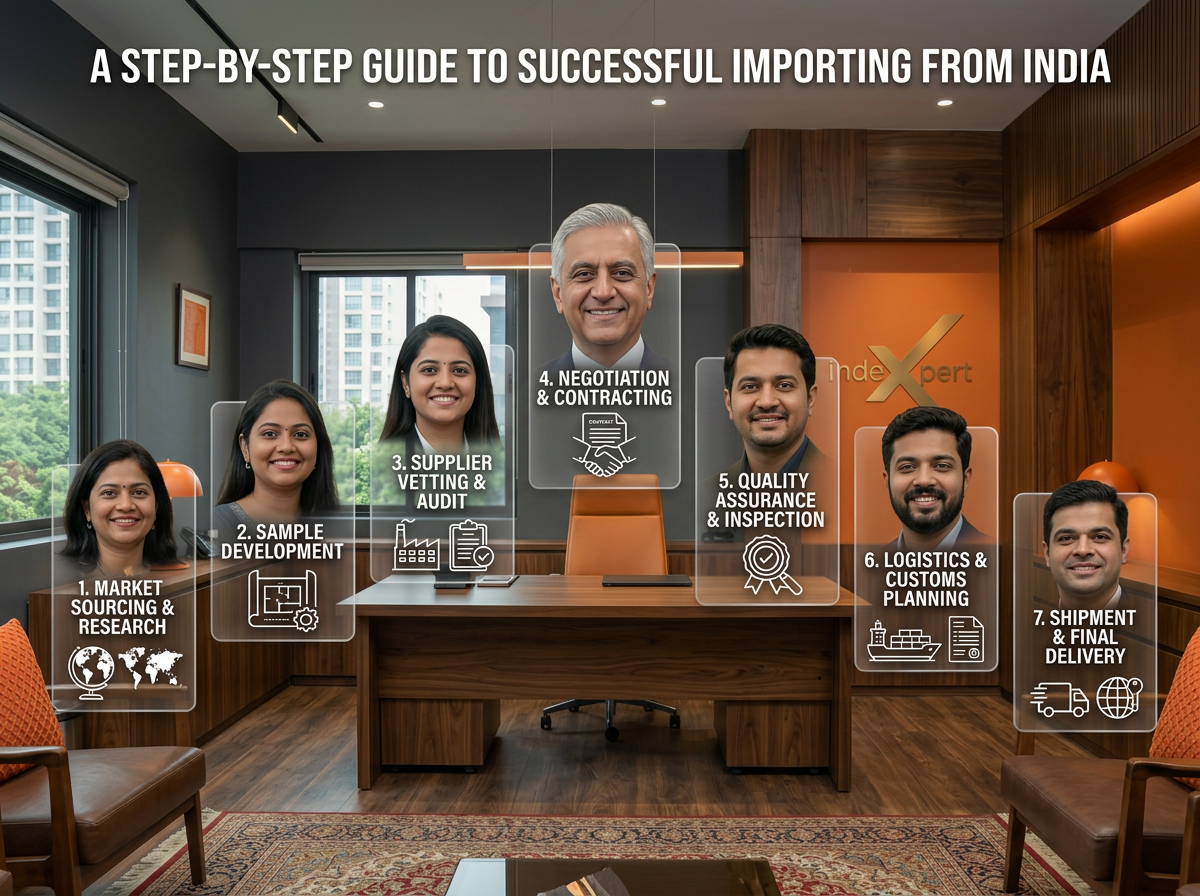
India is one of the world's leading sourcing destinations. This guide explains every step international buyers need to know to successfully import products from India.
Complete Guide to Importing Products from India: A Step-by-Step Guide for Global Buyers
India has emerged as one of the world's most attractive sourcing destinations, offering international buyers access to competitive pricing, skilled manufacturing capabilities, diverse product categories, and a rapidly growing export ecosystem. From agricultural commodities and textiles to engineering products and industrial components, India supplies products to businesses across the globe.
However, successful importing requires more than simply finding a supplier. Buyers must understand supplier verification, quality control, export documentation, shipping procedures, customs requirements, and risk management to ensure a smooth sourcing experience.
This comprehensive guide explains the complete process of importing products from India and provides practical insights for international buyers looking to build reliable supply chains.
Why Import Products from India?
India offers several advantages that make it a preferred sourcing destination for importers worldwide.
- Competitive manufacturing costs
- Large and diverse supplier network
- Strong export infrastructure
- Skilled workforce
- Wide product selection
- Growing manufacturing capabilities
- Government support for exports
These advantages have helped India become a trusted supplier for buyers across North America, Europe, the Middle East, Africa, and Asia-Pacific markets.
Step 1: Identify the Right Product to Import
Before beginning the sourcing process, buyers should clearly define product requirements and evaluate market demand.
Key considerations include:
- Product specifications
- Target market requirements
- Import regulations
- Expected sales volume
- Profit margins
- Quality expectations
Well-defined product requirements make supplier selection and quality control significantly easier.
Step 2: Research and Identify Potential Suppliers
Finding reliable suppliers is one of the most important stages of importing from India.
Potential supplier sources include:
- Industry trade shows
- B2B sourcing platforms
- Export promotion councils
- Industry associations
- Professional sourcing companies
- Business referrals
At this stage, buyers should create a shortlist of suppliers capable of meeting their product and volume requirements.
Step 3: Verify Supplier Credibility
Supplier verification helps reduce sourcing risks and ensures that potential partners have the capability to fulfill orders consistently.
Verification should include:
- Business registration review
- Export license verification
- Factory audits
- Production capacity assessment
- Quality management evaluation
- Certification verification
- Reference checks
Many successful importers use professional sourcing agencies to conduct supplier verification and factory audits before placing orders.
Step 4: Request Product Samples
Never place a large order without evaluating product samples.
Sample evaluation helps buyers assess:
- Product quality
- Material specifications
- Workmanship
- Packaging standards
- Performance requirements
- Compliance with expectations
Any required modifications should be discussed and documented before production begins.
Step 5: Negotiate Pricing and Commercial Terms
Once a supplier has been selected, buyers should negotiate commercial terms that protect both parties and establish clear expectations.
Key negotiation areas include:
- Product pricing
- Minimum order quantities (MOQs)
- Payment terms
- Production lead times
- Packaging requirements
- Warranty conditions
- Quality standards
All agreed terms should be documented in writing before production starts.
Step 6: Understand Incoterms
Incoterms define the responsibilities of buyers and sellers during international shipments.
Common Incoterms include:
- EXW (Ex Works) – Buyer assumes most transportation responsibilities.
- FOB (Free on Board) – Supplier delivers goods to the port of shipment.
- CIF (Cost, Insurance and Freight) – Supplier arranges freight and insurance.
- DDP (Delivered Duty Paid) – Supplier manages delivery to the buyer's location.
Understanding Incoterms helps prevent misunderstandings regarding logistics and costs.
Step 7: Monitor Production Progress
Maintaining visibility during production helps prevent delays and quality issues.
Buyers should request:
- Production schedules
- Progress reports
- Photographic updates
- Quality inspection reports
- Completion timelines
Regular communication reduces the likelihood of unexpected production challenges.
Step 8: Conduct Quality Inspections
Quality inspections are critical before shipment approval.
Inspection stages may include:
- Pre-production inspection
- During-production inspection
- Pre-shipment inspection
- Container loading inspection
Independent third-party inspections help ensure products meet agreed specifications before leaving the factory.
Step 9: Prepare Export Documentation
Accurate export documentation is essential for smooth customs clearance and international shipping.
Common export documents include:
- Commercial Invoice
- Packing List
- Bill of Lading or Air Waybill
- Certificate of Origin
- Insurance Certificate
- Inspection Certificate
- Export Declaration Documents
Missing or inaccurate documents can result in customs delays and additional costs.
Step 10: Arrange International Shipping
The shipping method depends on product type, shipment volume, budget, and delivery timelines.
Common transportation options include:
- Sea Freight (FCL)
- Sea Freight (LCL)
- Air Freight
- Courier Services
Sea freight is typically the most cost-effective option for large shipments, while air freight offers faster delivery for urgent orders.
Step 11: Complete Customs Clearance
Once goods arrive in the destination country, customs authorities review shipment documentation and applicable duties.
Importers should ensure:
- Correct HS code classification
- Accurate customs valuation
- Required permits are available
- Product compliance requirements are met
- Duties and taxes are calculated correctly
Working with an experienced customs broker can simplify the clearance process.
Step 12: Inspect Goods Upon Arrival
After receiving the shipment, importers should conduct a final inspection to verify product condition and compliance.
Review:
- Quantity accuracy
- Packaging condition
- Product specifications
- Shipping damage
- Labeling requirements
Any discrepancies should be documented immediately and communicated to the supplier.
Common Challenges When Importing from India
Although importing from India offers significant benefits, buyers may encounter challenges if proper planning is not in place.
- Supplier selection errors
- Quality inconsistencies
- Documentation mistakes
- Production delays
- Logistics disruptions
- Regulatory compliance issues
- Communication gaps
Most of these challenges can be minimized through supplier verification, quality inspections, and proactive supply chain management.
How a Sourcing Partner Can Help
Many international buyers work with professional sourcing companies to streamline procurement and reduce risks.
Sourcing partners typically provide:
- Supplier identification
- Supplier verification
- Factory audits
- Price negotiations
- Quality inspections
- Production monitoring
- Logistics coordination
Local sourcing expertise can significantly improve procurement efficiency while reducing operational risks.
Conclusion
Importing products from India can provide substantial advantages, including competitive pricing, diverse product availability, and access to a large manufacturing ecosystem. However, successful importing requires careful planning, supplier verification, quality management, documentation accuracy, and effective logistics coordination.
By following a structured sourcing process and implementing proper risk management practices, international buyers can build reliable supplier relationships, reduce procurement challenges, and create sustainable long-term supply chains.
For businesses seeking growth through global sourcing, India continues to offer exceptional opportunities across a wide range of industries and product categories.